

Structured network cabling is the copper and fibre infrastructure that cameras, access control, phones, wireless, computers and building systems all run on, installed, tested and certified with the network room behind it. NetraClos designs and installs the complete physical network foundation for commercial buildings.
One infrastructure, many systems
IT networks, wireless, security cameras, access control, VOIP, AV, intercoms and building systems increasingly share the same physical infrastructure. Designing them together rather than one trade at a time is what makes the result organized rather than accumulated.
We design cabling around what the building needs to carry now, and what it will carry once every one of those systems is on it. Then we install it, test every run and hand over the records.

What the infrastructure supports
- Data and computer networks, servers and network equipment
- IP security cameras and recording networks
- Access control, door controllers and electronic locks
- VOIP phones and business voice
- Wireless access points sized for real coverage
- Audio visual, meeting rooms, digital signage and displays
- Building automation and connected devices
- Copper to Category 5e, 6 and 6A, and fibre where distance or bandwidth needs it
Copper and fibre, each where it belongs
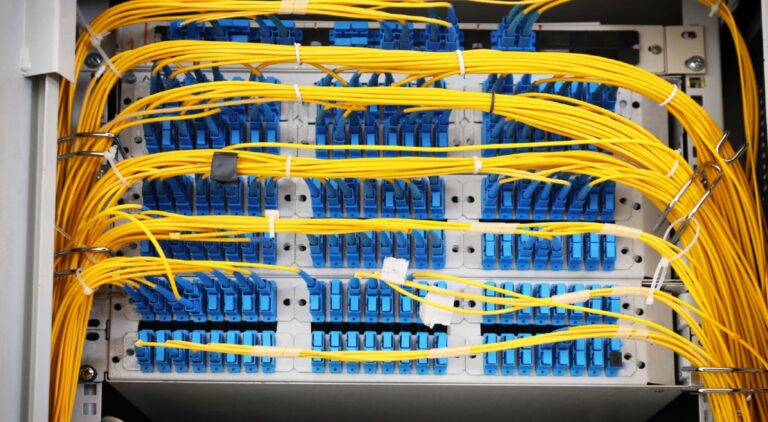
Copper connects workstations, phones, cameras, access points and door devices. Fibre carries the backbone between floors, network rooms and buildings, where distance, bandwidth or electrical isolation makes it the right answer. The media follows the application rather than a preference.
Power over Ethernet is a design decision, not an afterthought
Cameras, access points, phones, door devices and intercoms usually draw power over the same cable that carries their data. Cable selection, switch capacity, power budget and distance limits are all worked out during design, including headroom for what gets added in phase two.
New construction and existing buildings are different jobs
On new construction we work with the contractors and project team to get infrastructure in before walls close. On an existing building we assess what is already there and say plainly what can be reused, what should be upgraded and what has to be replaced.
Labelling is documentation, not decoration
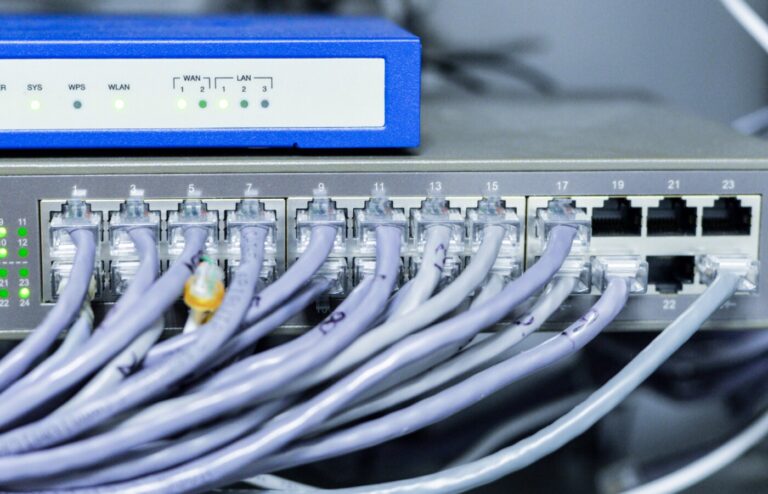
Both ends of every run are labelled to a scheme that matches the port schedule. That is what turns an installation from something only its installer understands into something any competent technician can work in.
Designed for today, with room for tomorrow
Pathway capacity, spare panel positions, network room locations, fibre backbone and switch headroom are all decided with expansion in mind. Building that in costs very little now and avoids a second cabling project later.
Get it wrong and it becomes a running cost
Poor infrastructure does not fail cleanly. It produces intermittent connectivity, devices that drop, and faults that cannot be reproduced on demand. That is the most expensive kind of problem a building can have, because nobody can ever close it out.

Tested, labelled and documented
Wire mapping, continuity, performance verification and fibre testing, with results handed over alongside a port schedule. Testing is what finds a bad termination before it becomes an intermittent fault nobody can reproduce.

Booked into the programme, not squeezed in
The window for this work opens when the structure is up and closes when the boarding starts. Routes are agreed with the electrical and mechanical trades before anybody is competing for the same ceiling void, so the containment goes in once and stays where it was drawn.
Installed to standard, not to habit
Structured cabling has a published standard for a reason. We design and terminate to ANSI/TIA-568, which governs everything from conductor termination and bend radius to how far a run can go before performance degrades, and every run is certified against it with test results in the handover pack.
Power over Ethernet has moved from phones to cameras, access points, door controllers and displays, and the current IEEE 802.3bt standard carries up to 90 watts over the data cable. That changes conductor selection and bundle sizing, so we engineer for the power the cable will carry, not just the data.
- Certified testing against ANSI/TIA-568 on every run
- IEEE 802.3bt power budgets engineered into cable selection
- Pathway fill and bend radius kept within standard
- Labelled to a scheme that matches the port schedule
Common questions
What is structured network cabling?
A designed cabling system of copper and fibre runs, patch panels and pathways that carries data, cameras, phones, wireless and building systems on one tested infrastructure, documented so the next person can work on it.
What category of cable should a business install, Cat6 or Cat6A?
It depends what the runs will carry and for how long. Cat6 covers most office and camera loads today; Cat6A carries higher bandwidth and better supports power over Ethernet at distance, which matters for future proofing. We specify per run, not by habit.
How much does network cabling installation cost?
Pricing follows drop count, pathway difficulty and termination standard, so we survey before quoting. Every run is certified and labelled, which is included, because untested cabling is the most expensive kind.
Is your cabling installation certification tested and labelled?
Yes. Every specified run receives certified testing with industry standard certification tools such as Fluke DSX devices, verifying real world performance against the published cabling standards before handover. Each run is also properly labelled at both ends for current and future reference, so any circuit can be located without issue, and the certification results and labelling schedule become part of your documentation package.
Can data cabling carry security cameras and phones too?
Yes. Cameras, access control, VOIP phones and wireless access points all ride the same structured cabling, powered over Ethernet where the design calls for it. Planning them together is the whole point.
Do you install network cabling across the GTA?
Yes. New construction and retrofit cabling for offices, hotels and residential buildings across Mississauga, Toronto, Brampton, Oakville and the wider GTA, plus Montreal and Ottawa.
Related articles



One team from design through commissioning
We cover the full project rather than turning up to install somebody else's design. That is what makes the result somebody's responsibility.
Design
We walk the building, work out what it needs to do and produce a design you can actually price against.
Procurement
We source the equipment and stand behind what we specify, so there is one party accountable for it.
Installation
Our own crews on site for cabling, mounting, terminations and containment.
Commissioning
Everything configured, tested and handed over with the records, credentials and documentation.
Tell us about the building
Send us the site and what you are trying to solve. We will tell you what it realistically takes.
Our Partners


