

Door automation means automatic operators fitted to swing and sliding doors, with activation, safety sensors and accessibility commissioning, so entrances open reliably for everyone who uses them. NetraClos supplies, installs, adjusts and maintains complete automatic door systems.
Sizing and sensing, then the commissioning
Operators are chosen for the weight of the door, the traffic it takes and whether it faces weather. An operator sized for an internal office door fitted to a main entrance will fail, and it will fail in the middle of a working day.
Safety sensing matters just as much. The door has to see somebody standing in its path and somebody moving slowly through it, and stop rather than push.

What the work covers
- Swing and sliding operators sized to the door and its traffic
- Activation by push plate, touchless wave or motion sensing
- Safety sensors that see somebody standing still, not only moving
- Sequencing with access control so the door unlocks before it opens
- Opening speed, hold open time and closing force set and verified
- Accessibility requirements checked at commissioning, not assumed
Maintenance is planned, because these wear out
Automatic doors have moving parts under constant load. A service schedule is set at handover so wear is caught during a visit rather than when the door stops working at nine in the morning.

The credential and the operator work together
A controlled automatic door has to unlock, then open, in that order. Getting the sequence wrong drives the operator against a locked door and eventually breaks it.

Signage and decals are part of the certification
The markings on an automatic door tell somebody how it behaves before they step into it, and an inspector will look for them. They go on at commissioning and get checked again at every service visit.
Certified operators, verified forces
Automatic doors are safety equipment. Operators are installed to the manufacturer's certification requirements, and opening speed, hold open time and closing force are measured and set to the applicable accessibility standards rather than left at factory defaults.
Activation and safety sensing are walked and tested from every approach a person can actually take, including the slow, the wheeled and the encumbered.
Common questions
What is an automatic door operator?
A motor and control unit that opens and closes a swing or sliding door on activation from a push plate, touchless wave sensor or motion detector, with safety sensing that stops the door if somebody is in its path.
Are automatic doors required for accessibility in Ontario?
Barrier free entrances are required in most new commercial construction and many renovations under the Ontario Building Code and AODA obligations. We commission operators against how a person actually uses the door, not just to the minimum.
How often do automatic doors need servicing?
They are the most used moving part in a building, so a service schedule is set at handover. Wear caught during a visit is far cheaper than a door failing at nine in the morning.
Can an automatic door work with access control?
Yes. The sequence matters: the door must unlock, then open. We integrate the operator with the credential system so both act as one, which also prevents the operator driving against a locked door.
What is the difference between swing and sliding door operators?
Swing operators fit existing hinged doors and are common on interior and accessible routes. Sliding operators suit high traffic entrances where people pass in both directions. We size either for the weight and duty of the actual door.
Related articles
Garage Door Access Control for Condos and Commercial Buildings
What a Universal Washroom Is and How Its Controls Work Together
Barrier-Free Door Operators: What a Building Should Plan For
How do Automatic Doors Work? Advantages, Types of Automatic Doors
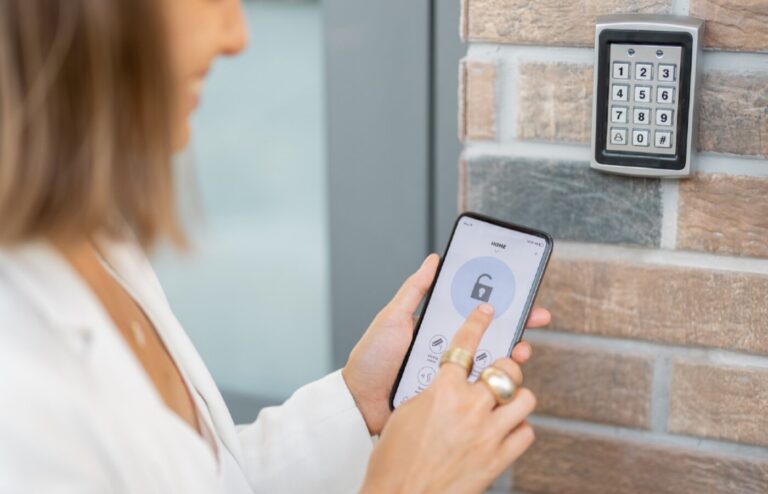
Mobile Key vs RFID Cards for Hotel Door Locks: How to Choose
One team from design through commissioning
We cover the full project rather than turning up to install somebody else's design. That is what makes the result somebody's responsibility.
Design
We walk the building, work out what it needs to do and produce a design you can actually price against.
Procurement
We source the equipment and stand behind what we specify, so there is one party accountable for it.
Installation
Our own crews on site for cabling, mounting, terminations and containment.
Commissioning
Everything configured, tested and handed over with the records, credentials and documentation.
Tell us about the building
Send us the site and what you are trying to solve. We will tell you what it realistically takes.
Our Partners


