

A universal washroom setup is an accessible single occupancy washroom where the automatic door operator, the occupied lock status and the emergency call work together as one system, tested as a sequence. NetraClos installs and commissions the complete washroom door and assistance sequence.
The parts are simple, the interaction is not
Each piece on its own is ordinary. An operator opens the door. A lock shows occupied. A call button raises an alarm. What makes a universal washroom different is that these three have to agree with each other, and they have to keep agreeing in the situations nobody wants to think about.
Somebody presses the button to open the door and it is locked from inside. Somebody falls and pulls the cord. Somebody locks it and cannot reach the release. Each of those is a sequence, not a feature, and the sequence is what we commission.

What the work covers
- Automatic operator with activation switches inside and outside
- Occupied and vacant status that the operator actually respects
- Emergency call from inside, reachable from floor level
- Release from outside so staff can get in when it matters
- Alerts routed to people on shift rather than a panel nobody watches
- Opening speed, hold open time and closing force set and verified
The call point has to be reachable from the floor
The most likely emergency in a washroom is a fall. A call button at standing height is the one that does not get used. Placement is decided around somebody who is already on the ground.
Occupied has to mean the door will not open
If the outside switch can drive the operator against an engaged lock, you get a door fighting itself and eventually a broken operator. The interlock between the two is set and tested rather than assumed.
Tested as a sequence, not as three separate parts
At commissioning we run the situations through end to end: occupied then someone presses outside, alarm raised from inside, staff release from outside. Testing each part alone proves nothing about how they behave together.

Signage is part of the system
A call point nobody can identify is not a call point. The signage that says what it does and what happens when it is pressed goes up as part of the install.

Touch free where hands are full
A wave plate removes the one contact point everybody in the building shares. It is set for a deliberate gesture rather than a hair trigger, so the door is not cycling every time somebody walks past it.
One sequence, tested end to end
A universal washroom is the strictest integration test in a building: operator, lock state, occupancy indication and emergency release must behave as one machine under the Building Code's barrier free provisions.
We commission the full sequence, occupy, lock, call for help, release from outside, restore, and document it, because the day it matters there is no time to discover a wiring assumption.
Common questions
What is a universal washroom?
A single occupancy accessible washroom where the door operator, the occupied lock status and the emergency call system work together as one system, releasable from outside in an emergency.
What are the requirements for a universal washroom in Ontario?
The Ontario Building Code sets requirements for barrier free washrooms including the operator, lock indication and an emergency call that can be raised from inside. We commission all three as a sequence, not as separate parts.
Why does the emergency call button need to be near the floor?
Because the most likely emergency in a washroom is a fall. A call point only reachable from standing height is the one that does not get used. Placement assumes the person is already on the ground.
What happens when the emergency call is activated?
An alert sounds and reaches staff who are on shift, the location is identified, and the door can be released from outside so help gets in. We test that full sequence end to end at commissioning.
Who installs universal washroom systems in the GTA?
We design, install and commission complete universal washrooms for offices, hotels and public buildings across Mississauga, Toronto, Oakville, Hamilton and the wider GTA.
Related articles
Garage Door Access Control for Condos and Commercial Buildings
What a Universal Washroom Is and How Its Controls Work Together
Barrier-Free Door Operators: What a Building Should Plan For
How do Automatic Doors Work? Advantages, Types of Automatic Doors
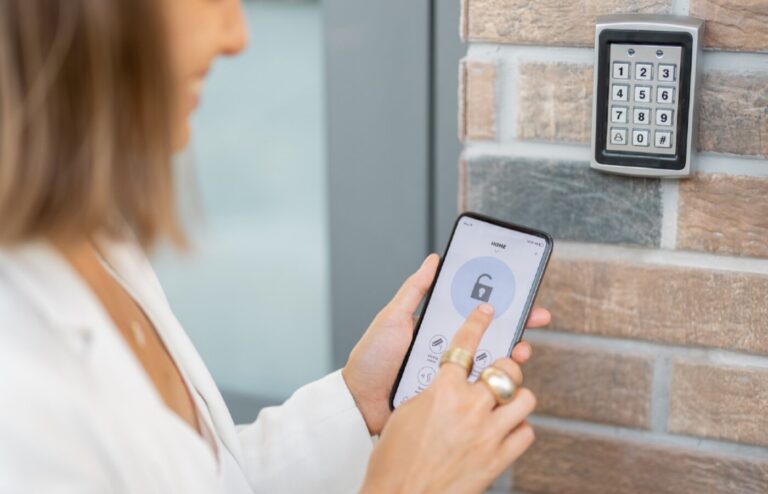
Mobile Key vs RFID Cards for Hotel Door Locks: How to Choose
One team from design through commissioning
We cover the full project rather than turning up to install somebody else's design. That is what makes the result somebody's responsibility.
Design
We walk the building, work out what it needs to do and produce a design you can actually price against.
Procurement
We source the equipment and stand behind what we specify, so there is one party accountable for it.
Installation
Our own crews on site for cabling, mounting, terminations and containment.
Commissioning
Everything configured, tested and handed over with the records, credentials and documentation.
Tell us about the building
Send us the site and what you are trying to solve. We will tell you what it realistically takes.
Our Partners


