

A commercial alarm system combines intrusion detection, environmental alarms and life safety integration with alerting that tells you what happened and where, tied to your cameras and doors. NetraClos designs, installs and monitors these systems for offices, retail, warehouses and multi residential buildings.
Not every alert deserves the same response
A door forced open, a motion event after hours, a water leak and a system fault are not the same thing. Your alarm system should help you tell them apart.
We design around event verification, priority and response, so your team gets the information it needs instead of a flood of notifications. Detect what matters, verify the event, respond with confidence.

Stop training your team to ignore alerts
- Fewer unnecessary alerts, so the noise floor stays low
- Enough context on each event for somebody to understand it
- Clear severity levels that separate information from action
- Defined response workflows, so it is obvious who does what
- Event history, so recurring problems can be found and fixed
- Zoning around real occupancy, so working late is not an alarm

Verification is what stops false alarms
An alarm tied to camera coverage lets somebody see what triggered it before anyone is dispatched. That single link removes most of the cost and noise of false activations, and it is the difference between an alert your team acts on and one they learn to swipe away.

Detection chosen for the room it sits in
A motion sensor in a loading bay and one in an office are not the same device, and pointing one at a roller door guarantees a call out. Matching the detector to the space removes most false activations before verification is ever needed.
Alarm solutions built around your property
Whether you are protecting a hotel, a commercial facility, an office, a retail location or a multi site operation, the alarm environment is designed around how the property actually operates.
Intrusion detection
Doors, windows, restricted areas and sensitive spaces, designed rather than scattered.
- Door and window contacts
- Motion detection
- Glass break detection
- Perimeter protection
- Restricted area monitoring
- Panic and duress devices
Fire and life safety integration
Critical events brought into a coordinated monitoring picture, with the separation between life safety and security kept where it belongs.
- Fire alarm integration
- Emergency notifications
- Alarm status monitoring
- Building event coordination
- Centralized visibility
Environmental alarms
Some of the most expensive incidents in a building start with something that is not a security breach at all.
- Water leaks and flooding
- Temperature and freezing
- HVAC failures
- Equipment room conditions
- Power failures
Access and security events
Alarm events correlated with the rest of the security environment, so an event has context instead of standing alone.
- Access control
- Door position
- Card reader activity
- Cameras
- Intercom systems
- Building automation
From alarm to action
A notification on its own is not enough. Every system we design follows the same sequence, so an event turns into a decision rather than a question.
Detect
A sensor identifies an abnormal condition or a security event.
Verify
Relevant information helps establish whether the event is genuine, accidental or expected.
Prioritize
Events are categorized by severity and by operational importance.
Notify
The right people receive the right alert through the appropriate channel.
Respond
Your team follows an established procedure instead of working it out during an incident.
Document
Events can be reviewed afterwards to understand what happened and improve the response.
One property, one security picture
An alarm should not operate in isolation. Where it makes sense, alarm events work alongside the security infrastructure you already have.
Alarm and video
An alarm event directs attention to the relevant cameras, so an operator can see what is happening before anyone is sent.
Alarm and access control
Understand whether an alarm happened alongside a valid credential, a forced entry, a door held open, or an attempt that was refused.
Alarm and intercom
Give staff a way to speak to whoever is at a controlled entrance rather than guessing from a notification.
Alarm and building systems
Environmental and equipment events give early warning while a small problem is still a small problem.
Designed for hospitality and commercial operations
Hotels and commercial properties have a particular problem: security cannot get in the way of normal operations. Guests, staff, contractors, deliveries, housekeeping and maintenance all create legitimate activity, and a design that ignores that produces false alarms by the week.
Hospitality
Protect guest and staff areas while keeping normal hotel activity from generating alarms nobody needs.
Offices
Secure entrances, offices, server rooms, storage and other restricted spaces.
Retail
Cover entrances, back of house, stock rooms and after hours activity.
Multi site operations
A consistent alarm strategy across properties, with each location still visible on its own.
Monitored to the Canadian standard
In Canada, professional alarm monitoring has a name: ULC certificated monitoring centres operating to ULC standards for redundancy, staffing and response. Where the application justifies it, we connect systems to ULC listed monitoring so an alarm is answered by a facility built to answer it.
Signal paths are supervised, IP or cellular with failover, so a cut line is itself an event rather than silence.
The alarm is only as good as the response
A professionally installed alarm system is more than sensors on a wall. It is a workflow connecting detection, people, technology and response, and the workflow is the part that decides whether any of it works at three in the morning.
Build that properly and when an alarm goes off your team is not asking what this is. They are already asking what happened and what we do next.
Common questions
What should a commercial alarm system include?
Perimeter detection on doors, windows and vulnerable openings, interior detection zoned to how the building is used, scheduled arming, monitoring with escalation, and camera verification so alerts can be confirmed before anyone is dispatched.
How do you reduce false alarms in a business?
Zoning around real occupancy, arming tied to credentials rather than memory, and camera verification. An alarm that cries wolf gets ignored and then switched off, so trusted alerts are the entire design goal.
Can the alarm arm itself when the last person leaves?
Arming can be scheduled and tied to the same credential that locks the door, so the system is armed because somebody left, not because somebody remembered a code.
What is alarm verification and why does it matter?
Linking the alarm to camera coverage so whoever monitors can see what triggered it. That single link removes most of the cost and noise of false activations.
Do staff working late set off the alarm?
No. Zones stay live where the building is in use after hours, so someone working late does not have to disarm the whole site to make a cup of tea.
Related articles
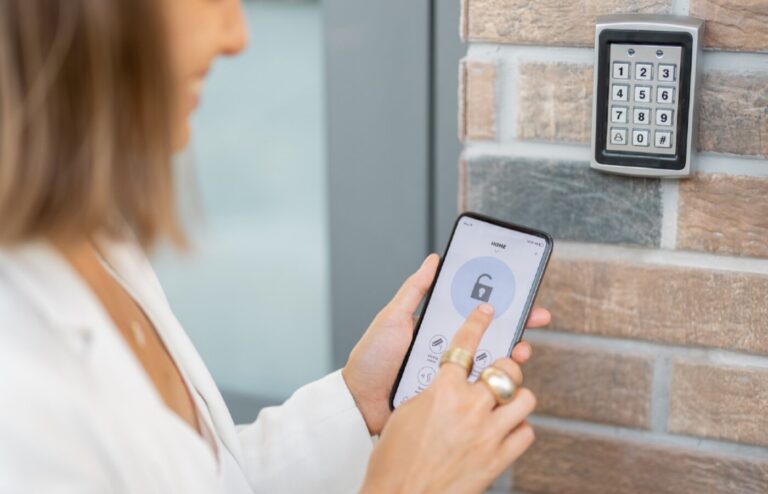
Mobile Key vs RFID Cards for Hotel Door Locks: How to Choose
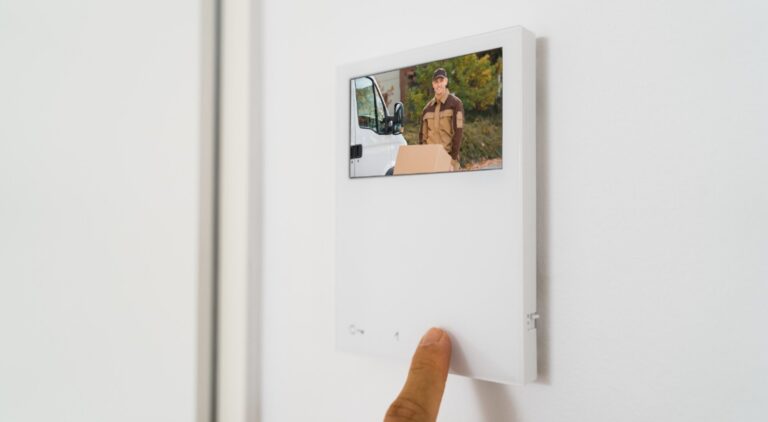
How Video Intercom Systems for Condos and Apartment Buildings Work

Mobile Credentials vs Key Cards for Office Access Control Systems
What is an Access Control System and How Does it Work?
What is a Paging System and How do Paging Systems Work?
One team from design through commissioning
We cover the full project rather than turning up to install somebody else's design. That is what makes the result somebody's responsibility.
Design
We walk the building, work out what it needs to do and produce a design you can actually price against.
Procurement
We source the equipment and stand behind what we specify, so there is one party accountable for it.
Installation
Our own crews on site for cabling, mounting, terminations and containment.
Commissioning
Everything configured, tested and handed over with the records, credentials and documentation.
Tell us about the building
Send us the site and what you are trying to solve. We will tell you what it realistically takes.
Our Partners


