Some messages cannot wait for people to check a screen. A spill on a loading dock, a code called in a care home, closing time in a retail store, a delivery driver at the wrong gate. Paging exists for the messages that need to reach everyone in a space at the same moment.
How a paging system works
Strip away the brand names and every paging system is the same three stages. A source, which is a microphone, a telephone or software. An amplifier, which takes that small signal and gives it the power to drive speakers. And the speakers themselves, chosen and placed for the space they serve.
The design work is almost entirely in the third stage. A warehouse with thirty foot ceilings, a carpeted office and a tiled kitchen need different speakers at different spacing, and the difference between a clear announcement and an unintelligible one is placement, not volume.
Zones are what make it useful
A page that reaches the whole building is occasionally necessary and usually disruptive. Zoning divides the system so a message reaches only where it matters: the warehouse but not the offices, the kitchen but not the dining room, back of house but never a hotel guest floor.
Zones are decided during design, because they follow the amplifier wiring or the network configuration. A building that skipped zoning lives with all calls everywhere, and staff learn to ignore the system, which defeats it.
Analog or IP
Traditional paging runs dedicated speaker wiring back to amplifiers, and it remains a perfectly good answer for a single open space with a handful of zones.
IP paging puts each speaker or zone controller on the network, powered over ethernet. That changes what the system can do: zones become configuration rather than wiring, a page can originate from any phone on the system or from software, scheduled announcements and tones run themselves, and a multi site business can page a location from anywhere.
The practical deciding factors are the building and the phone system. If structured cabling already reaches the spaces, IP paging rides it. If a modern phone platform is in place, paging becomes one more extension on it, and the intercom at the gate can join the same system.
Where each design earns its keep
- Warehouses and plants: high output speakers or horns, zoned by area, often with tones for shift changes
- Retail: discreet ceiling speakers, background music with page override, closing announcements on a schedule
- Schools and care settings: strict zoning, clear emergency announce paths, and testing on a calendar
- Hotels: back of house only, so housekeeping and kitchen hear what guests never do
The emergency caveat
Ordinary paging and life safety announcements are different systems with different rules. If an announcement is part of your fire strategy, it belongs on equipment designed and certified for that job. A general paging system can supplement it, but it cannot replace it, and a design that pretends otherwise fails exactly when it matters.
Get the zoning right, choose speakers for the space rather than the catalogue page, and tie the system into the phones people already use. That is the whole recipe for paging that staff trust instead of tune out.
In practice we design paging alongside the phones rather than as a separate box, because that is what makes staff use it. On a modern VoIP phone system a page is simply a dialled code from any handset, zones are set in software, and the amplifier and speakers are chosen for each space after we have stood in it and listened. Where a business needs to reach one person rather than a whole area, on a retail floor or in a hotel back of house, we pair paging with an associate alert system so a request for help lands with the right staff member instead of interrupting everyone.
Common questions
Can a paging system work with a VoIP phone system?
Yes, and it is the most common way we install it now. An IP paging adapter or a network speaker registers with the phone system as an extension, so paging a zone means picking up any handset and dialling a short code. Overhead announcements, night bells and scheduled tones all become features of the phone platform rather than a separate system, and a multi site business can page a branch from head office.
What is the difference between a paging system and an intercom?
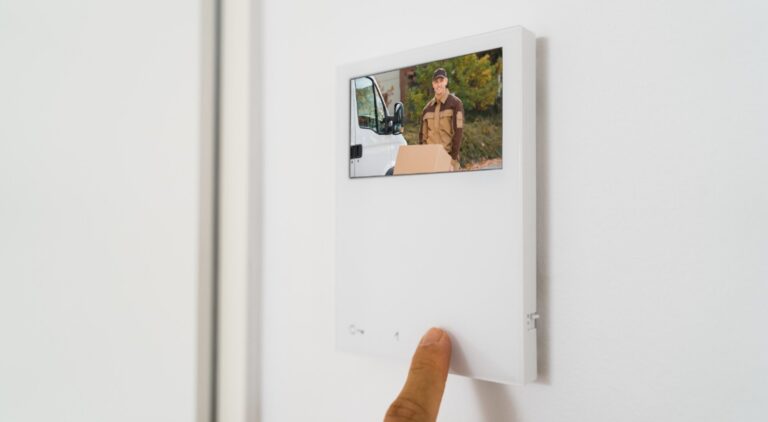
Paging is one way: a message from one source broadcast to everyone in a zone. An intercom is a two way conversation between two points, such as a gate and a reception desk or a classroom and the office. Many buildings need both, and modern IP systems can share the same speakers and the same phone platform, so a door station at a loading dock and a warehouse page can live in one system.
Do paging speakers need their own wiring?
Traditional analog paging uses dedicated speaker wire from a central amplifier to every speaker, typically on a constant voltage distribution scheme that lets many speakers share one run. IP paging speakers instead take a standard category cable from a Power over Ethernet switch, which supplies both power and audio. If a building already has structured cabling in the ceilings, IP speakers usually mean no new speaker wiring at all.
How loud does a paging system need to be?
Loud enough to be understood clearly above the normal noise of the space, which is a question of intelligibility rather than raw volume. More speakers at moderate level, spaced evenly, almost always beat a few very loud ones, because they avoid echo and dead spots. High noise areas such as production floors and loading docks call for horn speakers or higher output units, while offices and dining rooms need discreet ceiling speakers set low.
If your building needs paging that staff will actually trust, our business phone and paging team can zone and specify it for the spaces you have. Contact us to start.