

A door access control system puts every exterior and common door on one credential, with door status monitoring, held and forced door alerts, schedules and a full audit trail. NetraClos designs, installs and supports the complete access environment.
Knowing a door is shut matters as much as locking it
Credentials decide who may open a door. Monitoring tells you what actually happened to it: held open, forced, or shut and secure. Without the second part you have a system that reports intentions rather than reality.
We put status monitoring on the doors that matter, so a propped service door raises something rather than sitting open all afternoon unnoticed.

What the work covers
- Credentials across exterior, common and service doors
- Door status monitoring with held open and forced door alerts
- Schedules so doors lock and unlock without anyone remembering
- Audit trail on every controlled door
- Request to exit and emergency egress handled correctly
- Integration with cameras so an alert has footage attached
Egress is never compromised for security
Whatever the access design does, people have to be able to get out. Egress hardware and fire release are set up and tested so security never stands between somebody and the way out.

Scheduling does most of the work
Doors that unlock for business hours and lock again afterwards remove a whole category of human error, because nobody has to remember.

Credentials people already carry
A phone is harder to lend and quicker to revoke than a fob, and nobody leaves it in a coat pocket at home. Mobile and card credentials run together on the same system, so a building can move across at its own pace instead of in one weekend.
Modern protocols, supervised hardware
Reader to controller communication matters more than most buyers know. Legacy wiring can be silently tapped or spoofed; the industry answer is OSDP, an IEC standard protocol with AES-128 encryption and constant line supervision, so a tampered or disconnected reader raises an alert instead of a blind spot.
We specify supervised, standards based hardware and configure doors fail safe or fail secure to match fire code, then test every door state, power fail, forced, held, at commissioning.
- OSDP (IEC 60839-11-5) encrypted, supervised reader communication
- Fail safe and fail secure behaviour matched to fire code per door
- Tamper and line supervision alerts, not silent failures
- Full door state testing at commissioning
Common questions
What is a commercial access control system?
A system that decides who may open which door and when, using cards, fobs, mobile credentials or codes instead of keys, with a record of every opening. It covers exterior doors, common doors and service areas on one credential.
How much does door access control installation cost?
It depends on door count, reader types and whether cabling exists, so we survey first and quote fixed. Because we install the cabling ourselves there is no second contractor to coordinate or pay.
Can access control work with cameras and alarms?
Yes, and it should. Tying door events to camera footage means an alert arrives with video attached, and arming the alarm from the same credential removes a whole category of human error.
What happens to controlled doors during a power failure?
Doors are configured fail safe or fail secure to match fire code and the building's needs, and controllers carry battery backup so credentials and egress keep working through an outage.
Do you install access control in Mississauga and Toronto?
Yes. We design, install and commission access control for offices, hotels and residential buildings across Mississauga, Toronto, Brampton, Vaughan and the wider GTA, plus Montreal and Ottawa.
Related articles
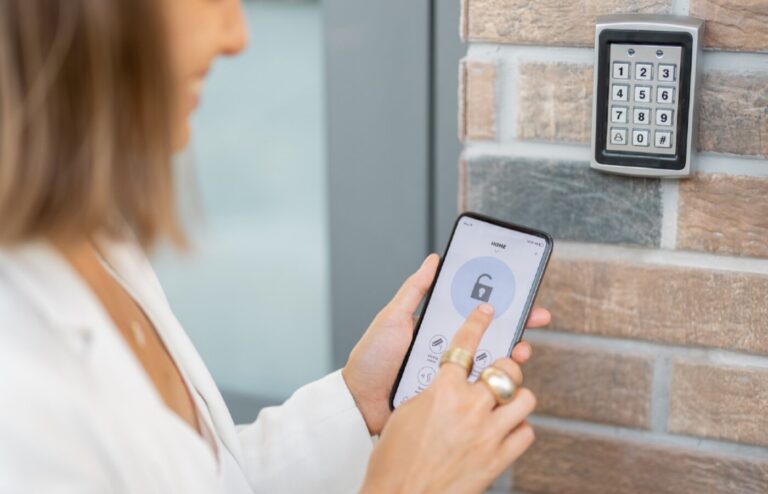
Mobile Key vs RFID Cards for Hotel Door Locks: How to Choose
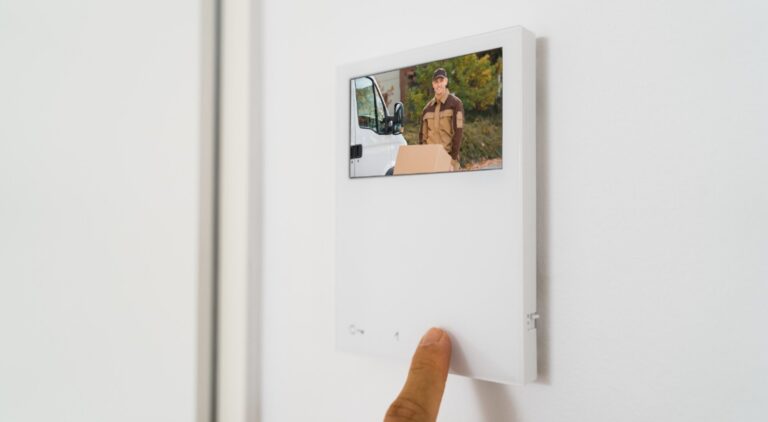
How Video Intercom Systems for Condos and Apartment Buildings Work
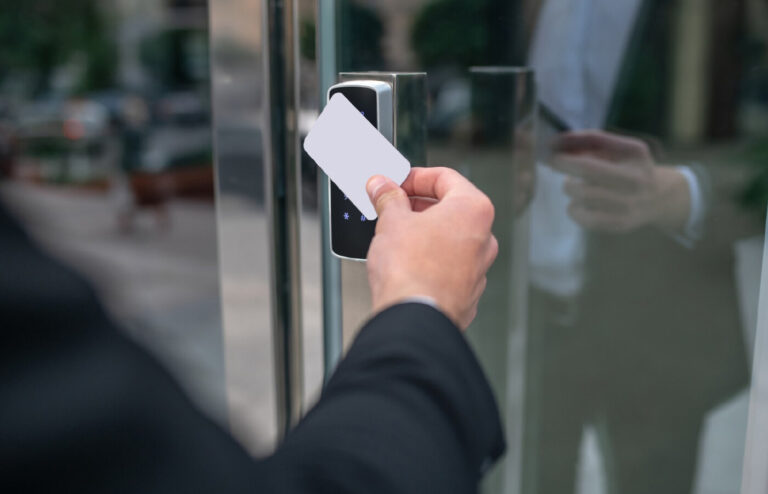
Mobile Credentials vs Key Cards for Office Access Control Systems
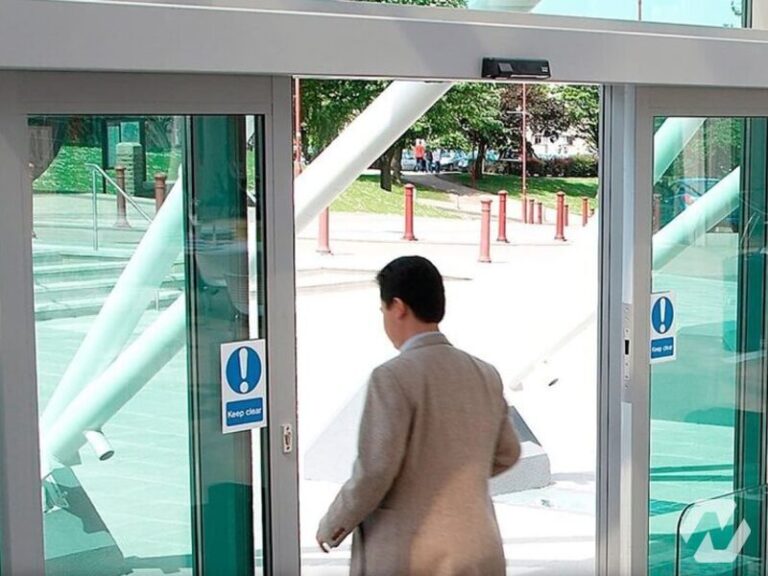
What is an Access Control System and How Does it Work?
What is a Paging System and How do Paging Systems Work?
One team from design through commissioning
We cover the full project rather than turning up to install somebody else's design. That is what makes the result somebody's responsibility.
Design
We walk the building, work out what it needs to do and produce a design you can actually price against.
Procurement
We source the equipment and stand behind what we specify, so there is one party accountable for it.
Installation
Our own crews on site for cabling, mounting, terminations and containment.
Commissioning
Everything configured, tested and handed over with the records, credentials and documentation.
Tell us about the building
Send us the site and what you are trying to solve. We will tell you what it realistically takes.
Our Partners


